19,200 → 785
A search space with focus
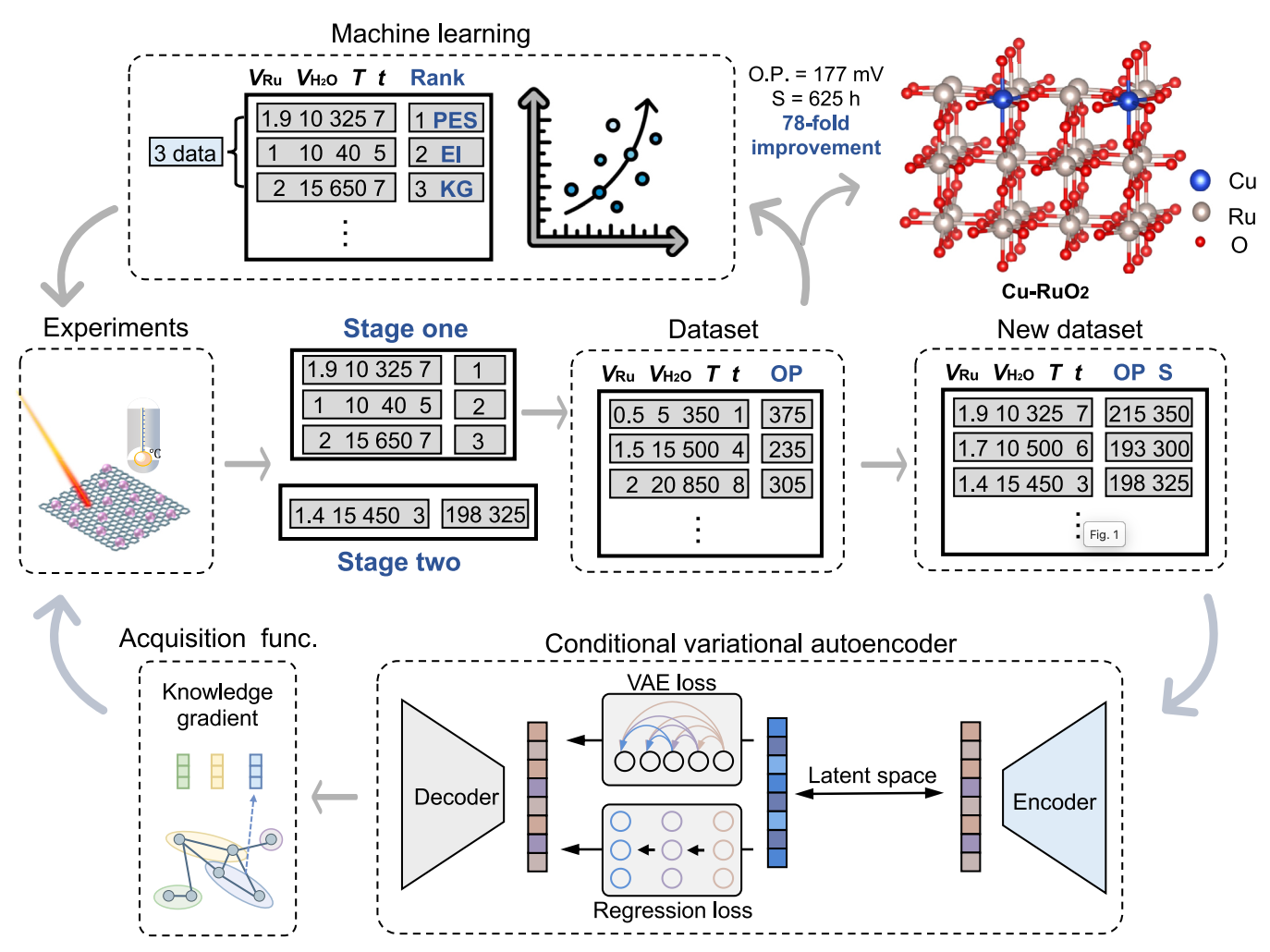
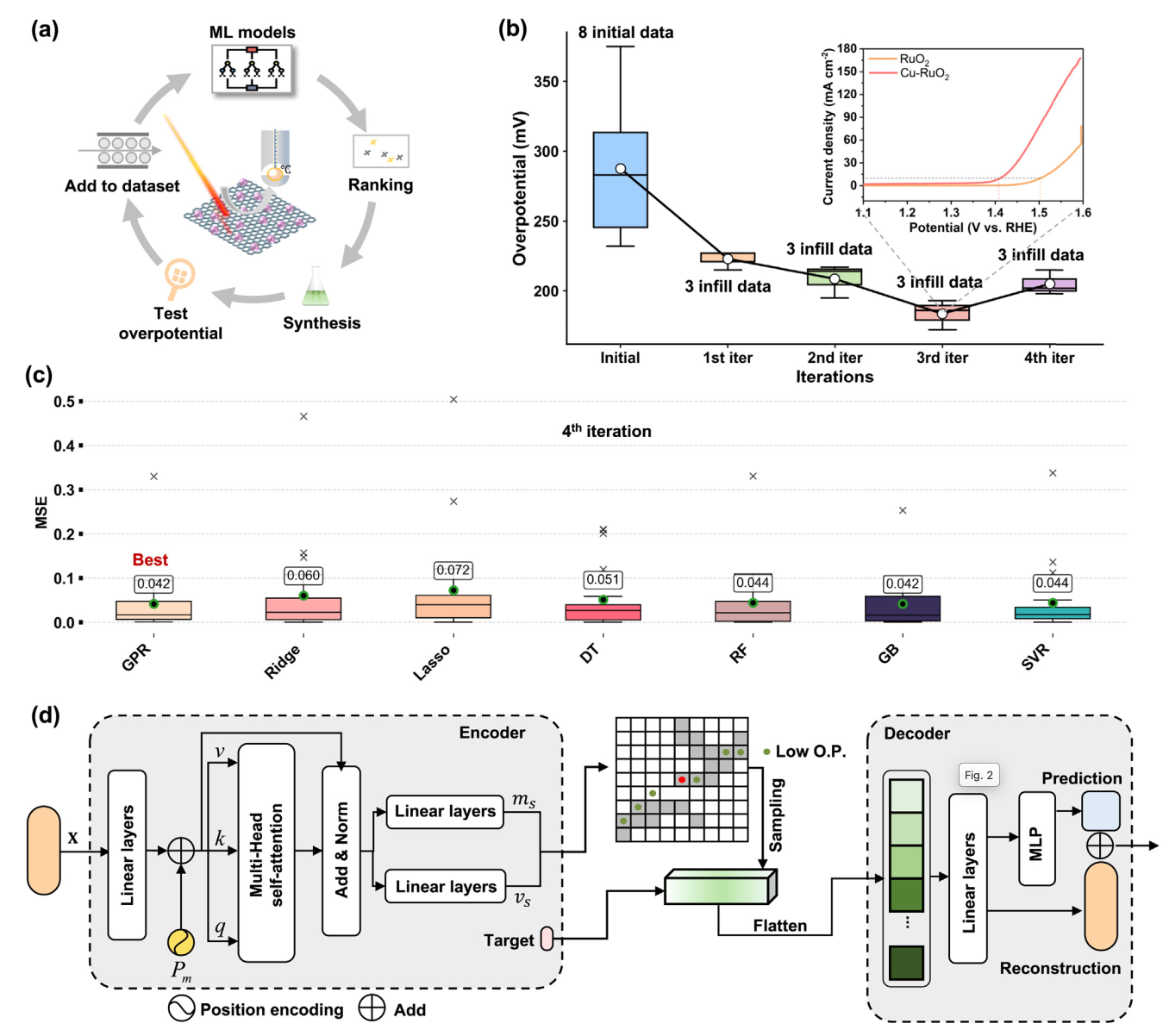
A conditional variational autoencoder concentrates the original recipe space into promising low-overpotential candidates.
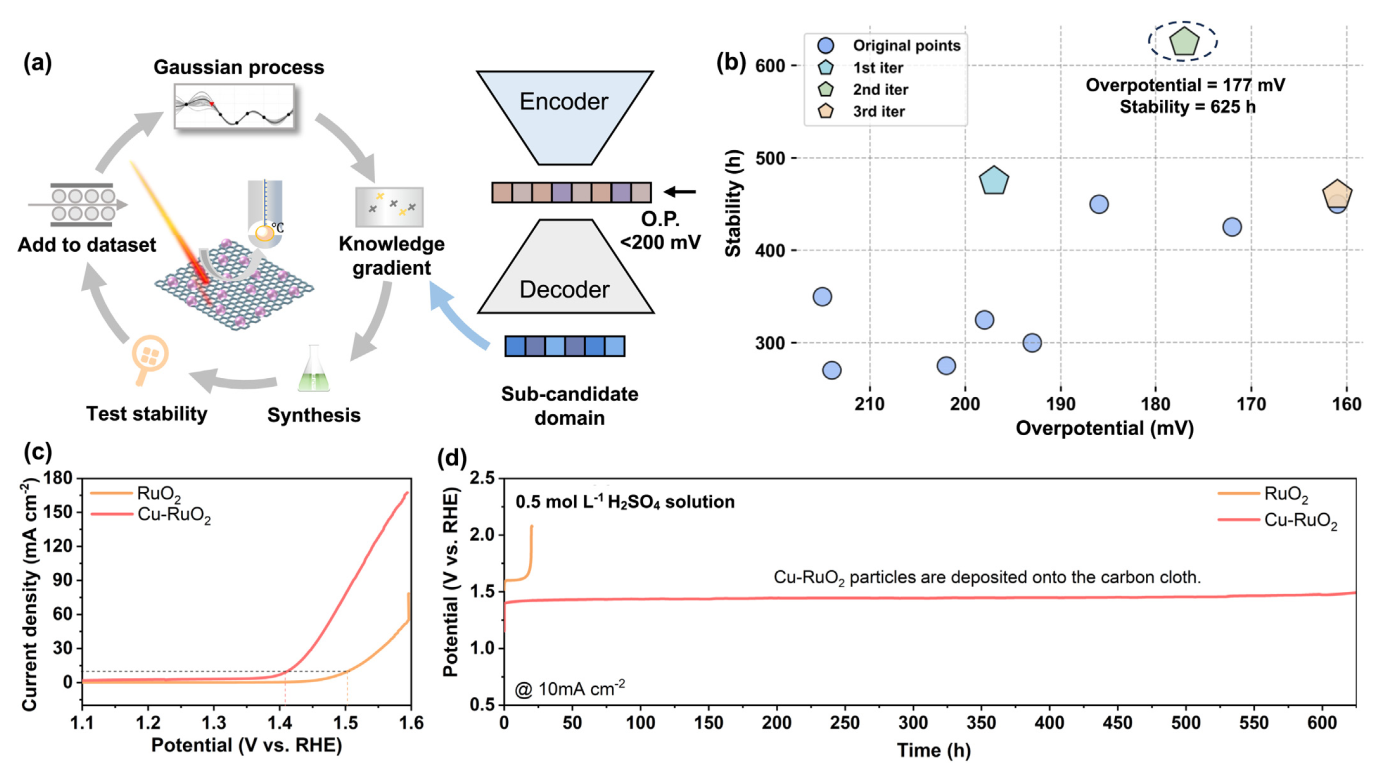
A spatial-adaptive active learning strategy identifies a Cu–RuO₂ catalyst that couples exceptional acidic OER activity with long-term durability.
Activity can be measured in minutes; durability testing can take hundreds of hours. Treating both objectives equally slows discovery.
This work links two targeted learning stages: it first finds low-overpotential recipes, then constructs a focused candidate space to search for stability.
A conditional variational autoencoder concentrates the original recipe space into promising low-overpotential candidates.
The closed loop reaches the design target with only 11 long-duration durability measurements.
At least 12 stability tests—and approximately 4,734 testing hours—are avoided during discovery.
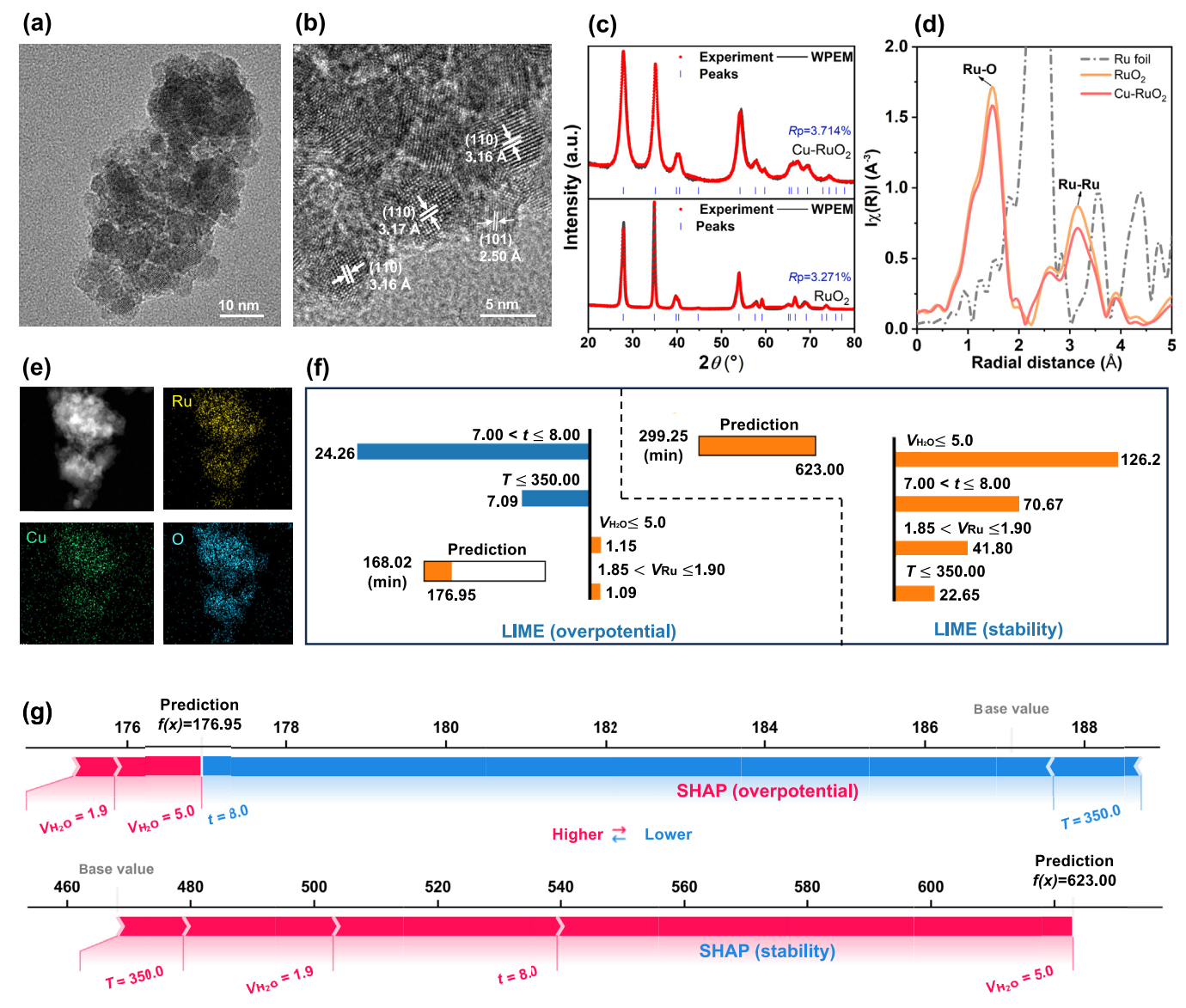
The workflow narrows the question, the learning loop finds the answer, and characterization confirms the resulting Cu–RuO₂ catalyst.